Neighbourhood notebook — 7 August 2026
A morning around the 9th arrondissement
Example
The southern half of Paris's 9th arrondissement fits inside a short rectangle: place Saint-Georges to the north, the Grands Boulevards to the south. A morning walk, from sloping market streets to covered passages.
The southern half of the 9th arrondissement is best covered on foot. The rectangle is small: place Saint-Georges to the north, the Grands Boulevards to the south, about twenty minutes' walk from edge to edge. A morning is enough, provided you start early.
The street that slopes
Begin at the top, on the edge of Pigalle. Rue des Martyrs runs steadily downhill towards the church of Notre-Dame-de-Lorette, completed in 1836. It is a street of food shops. The cheesemonger opens first, the greengrocer stacks crates on the pavement, the baker pulls the first loaves before eight.
Deliveries wind down by mid-morning. After that, the street belongs to pedestrians and their market bags. On Saturdays, you move at walking pace whether you like it or not.
To the east, avenue Trudaine runs alongside square d'Anvers and its plane trees. A market sets up there late on Friday afternoons. The rest of the week, the square doubles as a playground for the nearby schools.
Saint-Georges and the Nouvelle Athènes
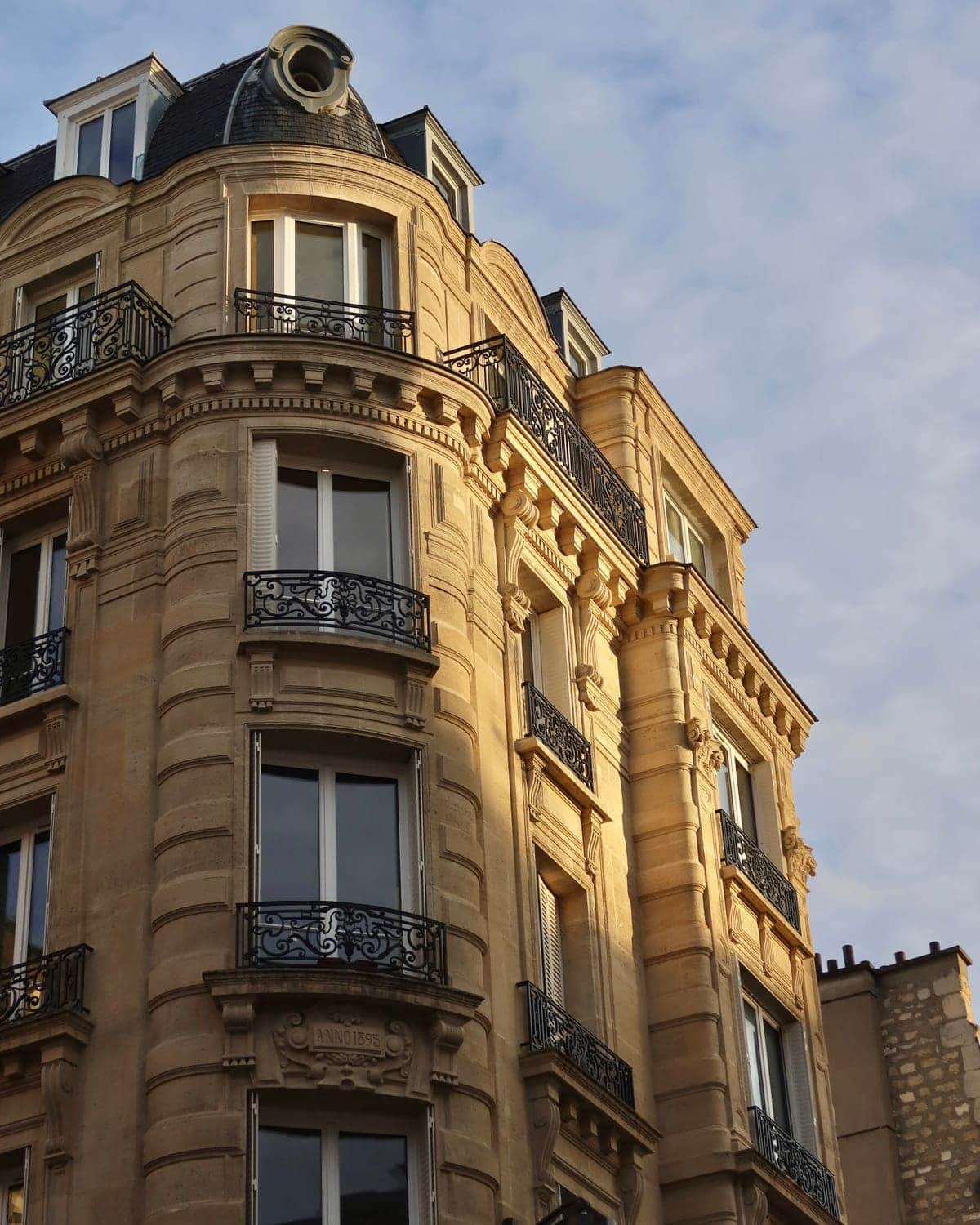
Between place Saint-Georges and rue Blanche, the neighbourhood went up between the 1820s and the 1840s. It was known then as the Nouvelle Athènes. Painters, musicians and writers kept their studios here.
The façades sit lower than elsewhere in the arrondissement. The courtyards are planted. Place Saint-Georges still has its central fountain and its rounded corner building, facing the métro entrance.
Two former artists' houses in the quarter are now small municipal museums. Their gardens can be walked through freely. Rue de la Tour-des-Dames, set back from the traffic, lines up private mansions with gardens from the same period.
One detour is worth making: square d'Orléans, an English-style courtyard opened in 1829 at 80 rue Taitbout. Chopin and George Sand lived there a few doors apart. The courtyard is quiet, and the central fountain still runs.
The covered passages
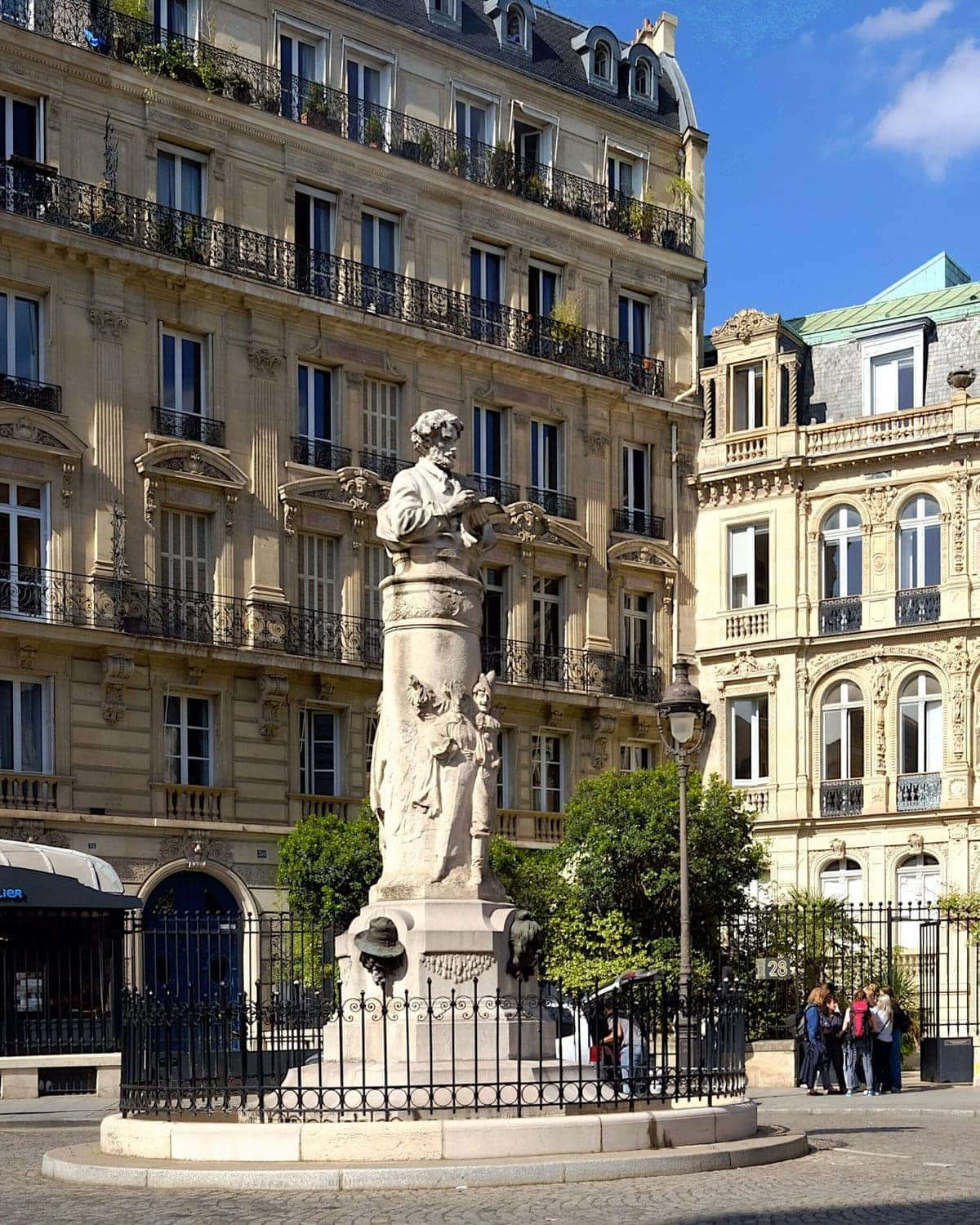
Further down, level with boulevard Montmartre, the walk moves under glass. Passage Jouffroy opened in 1845. Passage Verdeau continues it to the north, across rue de la Grange-Batelière.
Under the glass roofs, the shops feel as much like workshops as businesses: old books, prints, postcards, walking sticks and toys. The floors are tiled, the light falls from above. On a rainy day, you can cross much of the quarter under cover.
The passages open mid-morning. Arrive around ten and you watch them wake shop by shop, shutter by shutter. Across the boulevard, passage des Panoramas, opened in 1799, carries the walk on into the 2nd arrondissement for anyone not ready to stop.
Ending on the Grands Boulevards
The morning ends on boulevard Montmartre and boulevard des Italiens. Here the Haussmann façades return to their full height. The neighbourhood theatres post their programmes on the advertising columns.
Two ways home. Rue Cadet, another market street, climbs back towards the east; lunch can be assembled there in three stops. Or rue de la Chaussée-d'Antin heads west to the department stores of boulevard Haussmann and on to Gare Saint-Lazare, fifteen minutes on foot.
From there, the Opéra is ten minutes away. The 9th closes the way it opened: with a sloping street, and shopkeepers raising their shutters.
The editors